
Curation over volume
We would rather publish a smaller catalogue where every title is worth opening than pad the shelves. Each game is played through by our team before it reaches you, and titles that stop earning their place are retired.
BeyondVR is a mobile virtual reality entertainment service. We license, curate and publish VR games that were designed for a phone screen first, then wrap them in a single subscription anyone with a mobile number can start.
Most virtual reality still asks for expensive hardware and a spare room. BeyondVR takes the opposite route: every title in the catalogue is built to run on the device you already carry, and to look right whether you hold the phone in your hands or slot it into a viewer.
That constraint shapes everything. Sessions are short enough for a commute, controls are designed for a thumb, and the whole catalogue streams from the browser so nothing has to be downloaded before you can play.
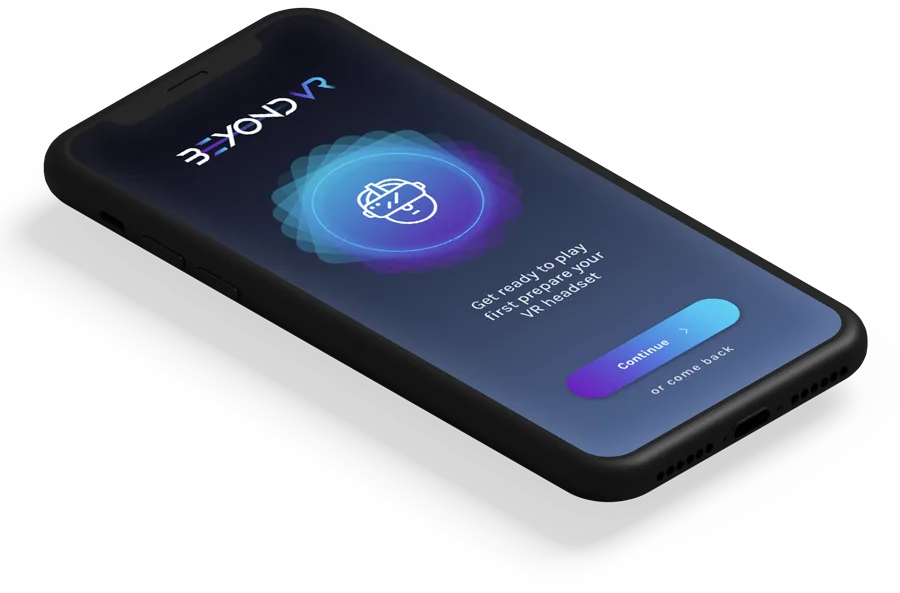
Three commitments shape every decision we make about the catalogue and the subscription behind it.
We would rather publish a smaller catalogue where every title is worth opening than pad the shelves. Each game is played through by our team before it reaches you, and titles that stop earning their place are retired.
A VR game that stutters is not a VR game. Every title is tuned to hold a steady frame rate on mid range phones, because comfort in virtual reality is a technical requirement rather than a nice extra.
Clear pricing, no lock-in, and a cancellation that takes one text message. You should never have to hunt for the exit, and you should always be able to see exactly what you pay and how often.
We want virtual reality to be something you pick up on a bus, not something you schedule.
Headsets will keep improving, and when they do BeyondVR will be ready for them. But the phone is where most people meet virtual reality for the first time, and that first meeting deserves to be good: quick to start, comfortable to play, and interesting enough to come back to tomorrow.
So we keep working on the parts that are easy to overlook. Load times. Frame pacing. Whether the recommendation you see in your second month is better than the one you saw on your first day. Those are the things that decide whether a catalogue feels alive.